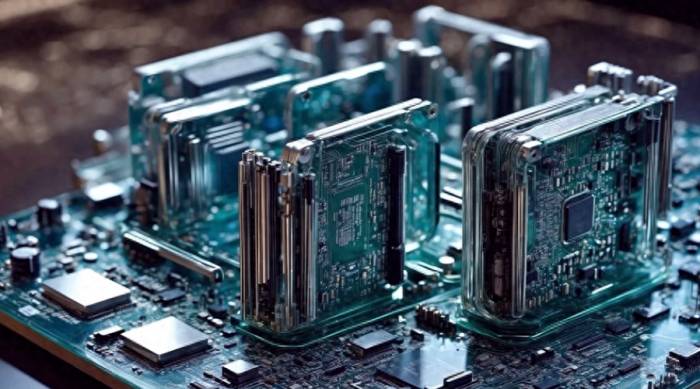
Let's be honest. Moore's Law scaling is getting brutally expensive and physically tricky. That's why everyone in semiconductors is talking about advanced packaging. It's not just a backup plan anymore; it's the main stage for performance gains. But moving from monolithic system-on-chips (SoCs) to assembling multiple chiplets in a single package? It's like swapping a solo violinist for a full orchestra. The music can be incredible, but coordinating it is a whole different ball game. The challenges are real, technical, and deeply entangled with business realities. Yet, the prospects for creating faster, more efficient, and specialized chips have never been more tangible. This is where the next decade of computing will be won or lost.
What You'll Learn
What Exactly Are We Talking About?
Forget the old days of just putting a single die in a plastic case and connecting it to a board. Advanced packaging, or heterogeneous integration, is about placing multiple silicon dies—chiplets—extremely close together inside one package. We're talking about connecting them with densities that rival on-chip wiring. The goal is to mix and match: a cutting-edge CPU chiplet from one fab, a high-bandwidth memory stack from another, and a specialized AI accelerator from a third, all integrated seamlessly.
A Quick Reality Check
Many newcomers think advanced packaging is just a fancy way to save space. It's way more than that. The core value proposition is performance per watt and design flexibility. By keeping signals inside the package, they travel shorter distances, use less energy, and can move vast amounts of data between chiplets—something impossible across a circuit board. It lets you use the best process node for each function, instead of forcing an entire, massive SoC onto the most expensive node.
The landscape isn't monolithic (pun intended). There's a spectrum of technologies, each with its own trade-offs. Here’s a breakdown of the key players:
| Technology | Key Differentiator | Best For | Biggest Headache |
|---|---|---|---|
| 2.5D (e.g., Silicon Interposer) | Dies sit side-by-side on a passive silicon slab with ultra-fine wiring. | High-performance computing (HPC), GPUs connecting to HBM. | Cost of the interposer itself, thermal expansion mismatch. |
| 3D Stacking (e.g., SoIC, Foveros) | Dies are stacked directly on top of each other, connected vertically. | Maximum density, memory-on-logic (like CPU on cache). | Heat dissipation, testing the bottom die after stacking. |
| Fan-Out (e.g., InFO) | Dies are embedded in epoxy, and connections "fan out" to the package substrate. | Mobile, RF, cost-sensitive high-density applications. | Warpage control during molding, die shift. |
| Embedded Bridge (e.g., EMIB) | Tiny silicon bridges are embedded in the package substrate to connect specific dies. | Targeted high-density connections without a full interposer cost. | Precise bridge placement, design complexity. |
Picking the right one isn't a simple checklist. It's a negotiation between performance, power, area, cost, and—critically—time-to-market.
The Hard Technical Stuff No One Talks Enough About
The marketing slides make it look smooth. The engineering reality is messy. Here are the gritty technical challenges that keep packaging teams up at night.
Interconnect Density: The Wiring Nightmare
This is the fundamental challenge. How do you connect thousands of signals between chiplets with micron-scale pitches? We've moved from solder bumps to copper pillars, and now into the realm of hybrid bonding—where dies are fused together using direct copper-to-copper or oxide-to-oxide bonds.
The problem? Yield and contamination. A single microscopic dust particle can ruin a hybrid bond. The processes require near-perfect planarization and immaculate cleanrooms. The industry is pushing towards smaller bump pitches (below 10µm), but the physics of electromigration and thermo-mechanical stress become brutal. A common oversight is not co-designing the chiplet's I/O circuits with the packaging team, leading to signal integrity issues that could have been avoided.
Thermal Management: The Silent Killer
Stacking high-power dies is like putting a space heater in a thermos. The heat has nowhere to go. In a 3D stack, the top die might be fine, but the bottom die cooks. We're seeing power densities that can exceed 1 kW/cm² in hot spots.
Solutions are invasive and expensive. We're talking about integrating microfluidic channels for liquid cooling directly into the silicon, using thermally conductive but electrically insulating adhesives, and designing sophisticated thermal interface materials (TIMs). The cost and complexity of cooling can sometimes erase the performance benefits of stacking in the first place. It's a constant battle.
Testing and Known Good Die (KGD)
This is a massive, often underestimated cost driver. In the old model, you tested a finished packaged chip. Now, you must test each individual chiplet to near-perfect yield before you assemble them into a $10,000 package. If one chiplet in a stack of ten is bad, you've scrapped nine good ones.
Probing tiny micron-scale bumps on a bare die is hard and damages the bumps. Built-in self-test (BIST) circuits are eating up precious silicon real estate. There's a push for standards like Universal Chiplet Interconnect Express (UCIe) to include test features, but we're not there yet. The lack of a robust KGD ecosystem is a major brake on the chiplet model.
Design Complexity and Tools Gap
EDA tools for multi-die co-design are playing catch-up. It's no longer just placing transistors. You're doing system-level floorplanning, managing power delivery networks across multiple dies, simulating signal paths that go from CMOS to package substrate and back, and analyzing 3D thermal gradients.
The toolchains from different vendors often don't talk to each other well. A systems architect might use one tool, the chip designer another, and the packaging engineer a third. Data handoffs are fragile. This fragmentation adds months to the design cycle and is a fertile ground for costly errors. The industry needs integrated co-design platforms, and they're evolving painfully slowly.
It's Not Just Tech: The Money and Supply Chain Headaches
Even if you solve all the physics problems, the business side can stop you cold.
The Cost Conundrum: Advanced packaging is expensive. The equipment for hybrid bonding or fan-out panel-level processing costs tens of millions. The materials—specialized substrates, molds, underfills—are pricier. This cost gets passed on. While it saves on monolithic die cost, the packaging bill can be 30-50% of the total module cost. For many applications, that math doesn't work yet.
Supply Chain Fragmentation: The dream is a "chiplet marketplace." But today, if you're not a giant like Intel, AMD, or NVIDIA, sourcing chiplets is hard. Who makes them? Who guarantees their performance and interoperability? The ecosystem is nascent. Companies like TSMC are building integrated "3D Fabric" offerings, but you're largely locked into their process and their partners. True multi-vendor heterogeneity is still a future goal.
Talent Shortage: There are plenty of transistor designers. There's a critical shortage of engineers who understand both silicon physics and package mechanics. This interdisciplinary knowledge is rare. Universities are only starting to create programs that bridge this gap.
Where This Is All Heading: The Realistic Roadmap
Despite the hurdles, the direction is clear. The prospects are driven by unavoidable needs.
Heterogeneous Integration Becomes Default: Within five years, most high-performance CPUs and accelerators will be chiplet-based. It will start at the top (servers, AI) and trickle down. The driver is simple: you can't get the performance from a single die anymore.
Material Innovations: Look beyond silicon. Glass substrates are emerging as a next-gen platform. They offer better dimensional stability, smoother surfaces for finer wiring, and are excellent for high-frequency RF applications. Companies like Intel have already announced plans for glass substrate packages later this decade.
Standardization and Ecosystem Growth: UCIe is a crucial first step. As it gains adoption, it will lower the barrier for chiplet interoperability. We'll see more third-party chiplet designers (IP companies for hardware) emerge, creating a vibrant ecosystem similar to the software world.
AI-Driven Design and Manufacturing: Machine learning will be essential to navigate the immense design space of chiplet placement, routing, and thermal management. AI will also be used on the fab floor for predictive maintenance of packaging equipment and real-time yield optimization.
The future isn't just about packing more transistors. It's about packing more function, more intelligently. Advanced packaging is the enabling toolkit for that future.
Your Burning Questions Answered
In advanced packaging, how does interconnect density actually limit performance, and what's being done about it?
The limit is bandwidth and energy. Wider buses need more physical connections (I/O). As bump pitches shrink below 40µm, capacitance and crosstalk skyrocket, eating into signal speed and power efficiency. The move is towards hybrid bonding, which eliminates bumps entirely for a direct dielectric-metal bond. This allows pitches down to 1-5µm, offering orders of magnitude more connections per mm². The catch is the need for atomically clean, perfectly flat surfaces, which is why it's still mostly in R&D and high-end products. Parallel to this, new signaling schemes like die-to-die SerDes are being developed to push more data through fewer wires, but they add latency.
What's the single biggest cost driver in advanced packaging that most companies underestimate?
Test and assembly yield loss. Everyone budgets for the fancy substrate and the bonding tool. They often underestimate the cascading cost of a failed assembly. Imagine a 6-chiplet module where each chiplet has a 99% test yield. The compounded yield of the module is 0.99^6 ≈ 94%. Not terrible. But if one of those chiplets is harder to test and has a 95% yield, the module yield drops to ~73%. That 27% loss on a $5000 part is devastating. The hidden costs are in the test infrastructure, the burn-in, and the logistics of handling and tracking known good die. This is why the industry is desperate for better pre-assembly test methods and robust chiplet KGD standards.
Is the chiplet model with advanced packaging truly more cost-effective than a large monolithic die?
It depends entirely on the die size and process node. The classic analysis from AMD and others shows a crossover point. For a large die (e.g., >600mm²) on an expensive leading-edge node (e.g., 5nm, 3nm), the yield of a single large die is poor. Breaking it into smaller, higher-yielding chiplets can save on silicon cost. However, this only works if the packaging cost (interposer, assembly, test) plus the added silicon area for I/O circuits on each chiplet is less than the savings from improved die yield. For smaller dies or older nodes, monolithic is almost always cheaper and simpler. The economic sweet spot is in very large, high-performance designs where monolithic scaling has hit a wall.
How far away are we from a true "plug-and-play" chiplet ecosystem like buying software components?
A decade, at least, for anything resembling true commoditization. We're in the early adopter phase. Standards like UCIe are the foundational plumbing—like USB for chiplets. But even with a standard interface, you have massive non-technical hurdles: business models (how do you price a chiplet?), liability (who's responsible if an Intel CPU chiplet fails next to a Samsung memory chiplet in a TSMC package?), and security (how do you trust a third-party chiplet not to have hardware Trojans?). The first wave will be within trusted partner ecosystems (e.g., TSMC's 3Dblox partners). A broad, open market will take much longer to develop, requiring not just tech standards but legal and commercial frameworks that don't exist today.