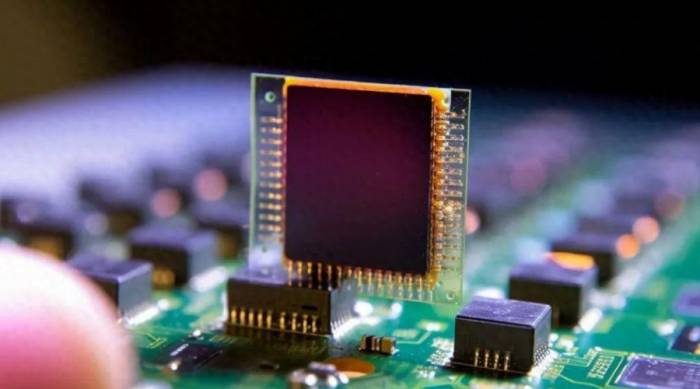
If you've been following tech news, you've seen the headlines. Quantum chips are back in the spotlight. Again. It feels like we've been here before, right? A big announcement, claims of "quantum supremacy," then a quiet period where nothing seems to change for regular folks like us. So why should you care this time?
This time feels different. The buzz isn't just about a single, isolated lab experiment. It's being driven by tangible, hardware-focused progress that's moving quantum computing from a purely scientific curiosity toward a potentially usable technology. We're seeing real competition, significant capital investment, and, most importantly, a shift in strategy from chasing abstract milestones to solving concrete engineering problems.
What You'll Learn in This Guide
- Why the Sudden Renewed Focus on Quantum Chips?
- What Are the Main Types of Quantum Chips?
- Who's Leading the Quantum Chip Race Right Now?
- Moving Beyond the Hype: What Can Quantum Chips Actually Do?
- The Practical Challenges Holding Quantum Chips Back
- Future Outlook: When Should We Expect Real Applications?
- Your Quantum Chip Questions, Answered
Why the Sudden Renewed Focus on Quantum Chips?
It's not one thing. It's a confluence of factors that have all hit a critical point in the last 18-24 months. The first wave of hype was about proving the principle. This second wave is about building a machine that can do something reliably useful.
The error correction breakthrough is the big one. For years, the fundamental flaw of quantum chips (or qubits) has been their fragility. They lose their quantum state (a problem called decoherence) due to heat, vibration, or even stray electromagnetic waves. Building a "logical qubit"—a stable, error-corrected unit of quantum information—from many error-prone "physical qubits" was a massive, unsolved engineering hurdle. Recently, teams at companies like IBM and Quantinuum have published results showing they can not only detect errors in real-time but actually suppress them below a key threshold. This isn't a solved problem, but it's the first solid proof that the path to stability might be viable.
Then there's the architecture war. It's no longer just superconducting loops in giant dilution refrigerators. Companies are betting big on different types of quantum chips, each with pros and cons. Trapped ion chips from companies like IonQ offer incredible stability and coherence times. Photonic quantum chips, like those from PsiQuantum or Xanadu, aim to work at room temperature. This diversification means multiple paths to success are being funded and explored aggressively.
A Personal Observation: The chatter at recent physics and computing conferences has shifted. Five years ago, the talk was 90% theory and 10% hardware limitations. Now, it feels inverted. The conversations are dominated by fabrication techniques, cryogenic control systems, and modular chip design. The engineers have taken over from the pure theorists, and that's always when things start to get real.
Finally, the money and the race have intensified. China's massive national investment in quantum tech has lit a fire under Western governments and corporations. The U.S. CHIPS and Science Act allocates funding for quantum information science. Venture capital is flowing into hardware startups, not just software layers. When you see semiconductor giants like Intel dedicating their advanced fabrication facilities to making quantum chips, you know the industry is getting serious about manufacturing at scale.
What Are the Main Types of Quantum Chips?
Not all quantum chips are created equal. The choice of platform dictates almost everything: how cold it needs to be, how fast it can run, how easy it is to connect qubits, and what kind of problems it might be best at solving. Here's a breakdown of the main contenders you'll hear about.
| Chip Technology | How It Works (Simply) | Biggest Advantage | Biggest Challenge | Key Players |
|---|---|---|---|---|
| Superconducting Qubits | Tiny circuits cooled to near absolute zero (-273°C) where electrons flow without resistance, creating quantum states. | Fast operation speeds; leverages existing chip fabrication tech. | Extreme cooling required; qubits are large and noisy. | Google, IBM, Rigetti |
| Trapped Ion Qubits | Individual atoms (ions) are suspended in a vacuum by electromagnetic fields and manipulated with lasers. | Very high stability and coherence times; naturally identical qubits. | Slower operation speeds; scaling to many qubits is complex. | IonQ, Quantinuum |
| Photonic Qubits | Uses particles of light (photons) to carry quantum information through optical circuits. | Can operate at room temperature; potentially easier to network. | Difficulty creating and reliably detecting photonic qubits on-demand. | PsiQuantum, Xanadu |
| Semiconductor Spin Qubits | Uses the spin of an electron trapped in a semiconductor (like silicon) as a qubit. | Potential for dense integration using classic chip manufacturing plants. | Extremely difficult to control and measure single electron spins. | Intel, Silicon Quantum Computing |
There's no clear winner yet. Superconducting chips have the most qubits today. Trapped ions have the best quality. Photonics promises a radical different approach. It's a horse race, and that competition is accelerating progress across the board.
Who's Leading the Quantum Chip Race Right Now?
The landscape is a mix of tech titans, well-funded startups, and national labs. Their strategies reveal a lot about where they think the value is.
IBM is going all-in on superconducting chips and a roadmap they publish openly. Their focus is on scaling qubit counts year-over-year (their "Condor" chip has over 1,000 qubits) while relentlessly improving error rates. They're betting that volume and system-level engineering will win.
Google, after its 2019 "quantum supremacy" demonstration, has been quieter on the hardware front but is deeply invested in error correction research. Their recent papers on logical qubits are considered landmark. They have the resources to play a very long game.
Startups like Rigetti and IonQ are trying to carve out niches. Rigetti focuses on hybrid quantum-classical systems and cloud access. IonQ is pushing the quality of trapped-ion systems, boasting the highest "algorithmic qubit" metrics—a measure of useful computational power, not just raw qubit count.
Then there's the dark horse: semiconductor incumbents like Intel. Their approach with spin qubits in silicon is fundamentally different. It's slower, but their argument is compelling: if the goal is a million-qubit chip, you need to build it using the tools and scale of the existing semiconductor industry. They're thinking about quantum chips as a future product line, not just a research project.
Moving Beyond the Hype: What Can Quantum Chips Actually Do?
Let's be brutally honest. Your laptop isn't getting a quantum co-processor next year. The killer app for quantum computing hasn't been invented yet. But the potential application areas are becoming clearer, and they're less about speed and more about solving problems that are fundamentally impossible for classical computers.
Chemistry and Materials Science: This is the most promising near-term area. Simulating complex molecules for drug discovery or designing new catalysts for carbon capture involves modeling quantum mechanics. Classical computers approximate this poorly. A quantum chip could simulate these systems natively. Imagine designing a new battery material or a fertilizer that doesn't require massive energy to produce.
Optimization: From streamlining global logistics networks to optimizing financial portfolios, many real-world problems involve finding the best solution from a near-infinite set of possibilities. Quantum algorithms could explore these solution spaces in novel ways.
Machine Learning: Certain types of quantum machine learning algorithms could, in theory, recognize patterns in data that are invisible to classical neural networks. This is further out, but labs are experimenting now.
Here's a scenario: A pharmaceutical company, in 8-10 years, might use a quantum computer to simulate the interaction between a new drug candidate and a protein associated with a disease. Instead of synthesizing and testing thousands of compounds physically (a process taking years and billions of dollars), they could run millions of digital simulations in weeks, narrowing the field to a handful of promising candidates for lab testing. The quantum chip becomes a revolutionary design tool.
The Practical Challenges Holding Quantum Chips Back
For all the progress, the roadblocks are still enormous. This is where the 10-year-experience perspective is crucial. Newcomers often miss these gritty details.
It's not about the qubit count. The media loves the "my chip has more qubits than yours" narrative. It's mostly meaningless. A 1000-qubit chip where the qubits are too noisy to hold a calculation is less powerful than a 100-qubit chip with superior fidelity and connectivity. The real metric is "quantum volume" or similar holistic measures of computational power.
The "wiring" problem is a nightmare. Every physical qubit needs multiple control lines—for microwave pulses, magnetic fields, or lasers. In a million-qubit chip, you can't have three million wires coming out of a refrigerator. This I/O bottleneck is a massive, often under-reported, engineering challenge. Companies are working on cryogenic CMOS control chips placed inside the fridge to multiplex signals.
Software and algorithms are lagging. We're still figuring out how to program these machines effectively. Writing a quantum algorithm is nothing like classical programming. The tools are primitive, and we lack a clear understanding of which problems will see a practical quantum advantage first.
Future Outlook: When Should We Expect Real Applications?
Timelines in quantum computing are notoriously optimistic. A healthy dose of skepticism is warranted. Based on the current trajectory of hardware development:
The next 3-5 years will be dominated by continued improvement in error correction and the demonstration of small-scale, fault-tolerant logical qubits. We'll see more "quantum utility" experiments—where a quantum chip solves a small, tailored problem slightly better or faster than the best supercomputer, but not on a commercially relevant scale.
The 5-10 year horizon is where things get interesting. If error correction scales as hoped, we might see the first specialized quantum processors tackling specific, valuable problems in chemistry or optimization for select industry partners. These won't be general-purpose computers but expensive, bespoke instruments.
Widespread impact is almost certainly a 10+ year proposition. This is when quantum computing could start to transform industries. The companies making big bets today—the IBMs, Googles, and dedicated startups—are playing for that long-term payoff. They're building the foundational technology stack now.